
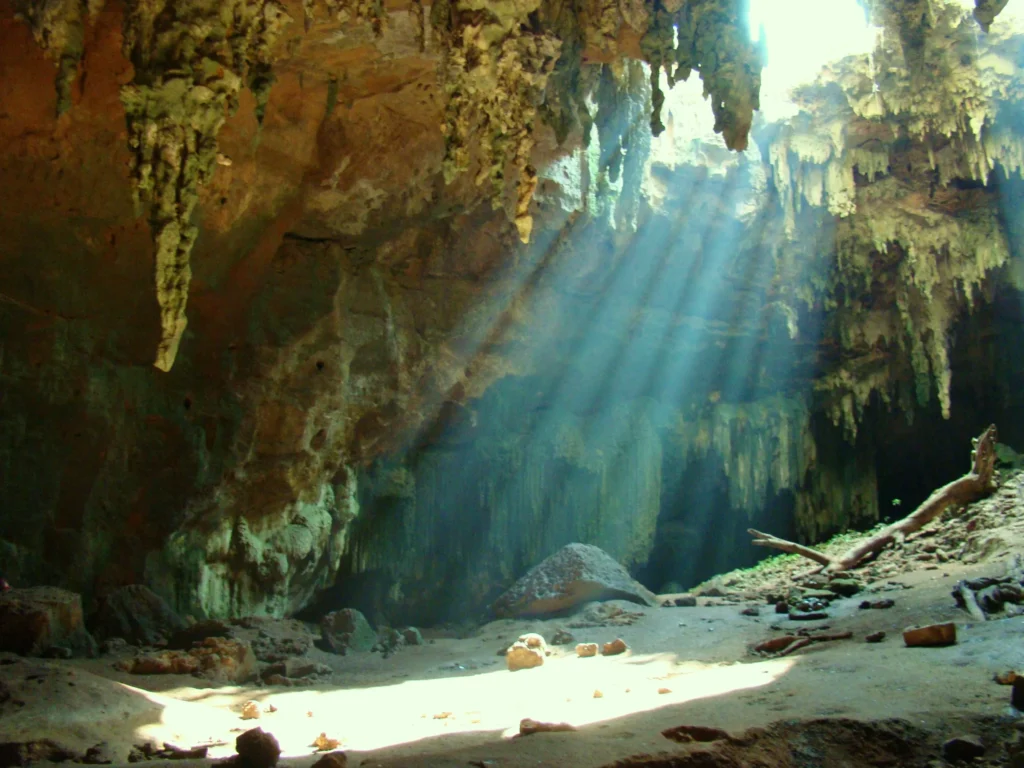
How Caves and Cenotes Form
The Yucatán Peninsula sits on a limestone landscape. Rainwater can dissolve the rock over time, forming underground spaces and pathways. Where openings expose groundwater, cenotes become visible at the surface or within caverns.
Stalactites and Stalagmites
Mineral-bearing water leaves deposits as it drips through a cave. Stalactites grow from the ceiling, while stalagmites rise from the floor. When they meet, a column can form.
The Cavern of Zazil Tunich
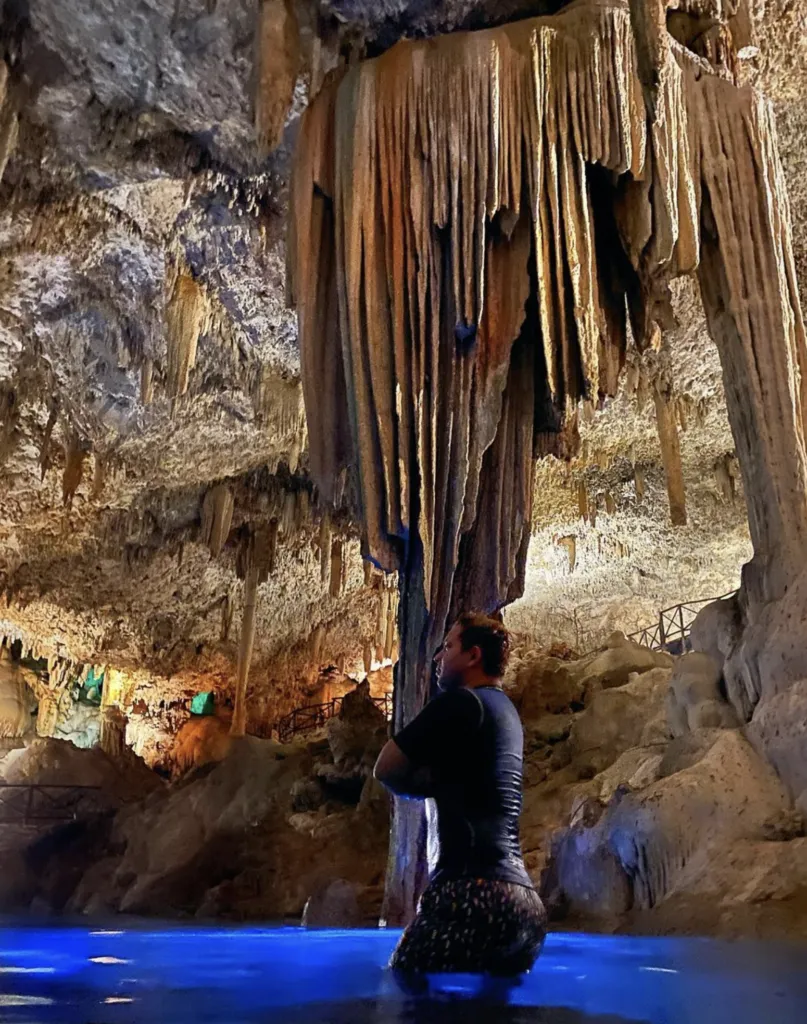
Zazil Tunich is near Valladolid, on the Yalcobá–Xtut road, rather than in Tecoh. Its cavern contains striking formations, including the large feature known as the Great Column. Ask your guide about the formations visible along the visitor route.
Other Fascinating Formations
Caves can also contain curtain-like deposits and cave pearls. Different movements of mineral-bearing water create different forms, making the underground landscape rich in textures and details.

The Space of the Cavern
Broad ceilings and chambers reveal the scale of the underground environment. Their forms develop through geological processes, creating spaces that can inspire a sense of wonder.
Cultural Meanings of Caves and Cenotes
Maya traditions associated caves and cenotes with sacred meanings, including the underworld. Archaeological evidence from some sites helps researchers understand these relationships; it should not be assumed to apply identically to every cavern.
Planning a Cave or Cenote Visit
The peninsula offers different kinds of visits, from guided cavern walks to specialist activities. Each destination has its own access rules and requirements. Choose an experience suited to your plans and confirm the details with its operator.
Exploring a cavern brings geology and cultural stories into focus. Visit Zazil Tunich to appreciate a remarkable underground setting near Valladolid, and follow your guide’s advice to help care for it.
